ATTENTION
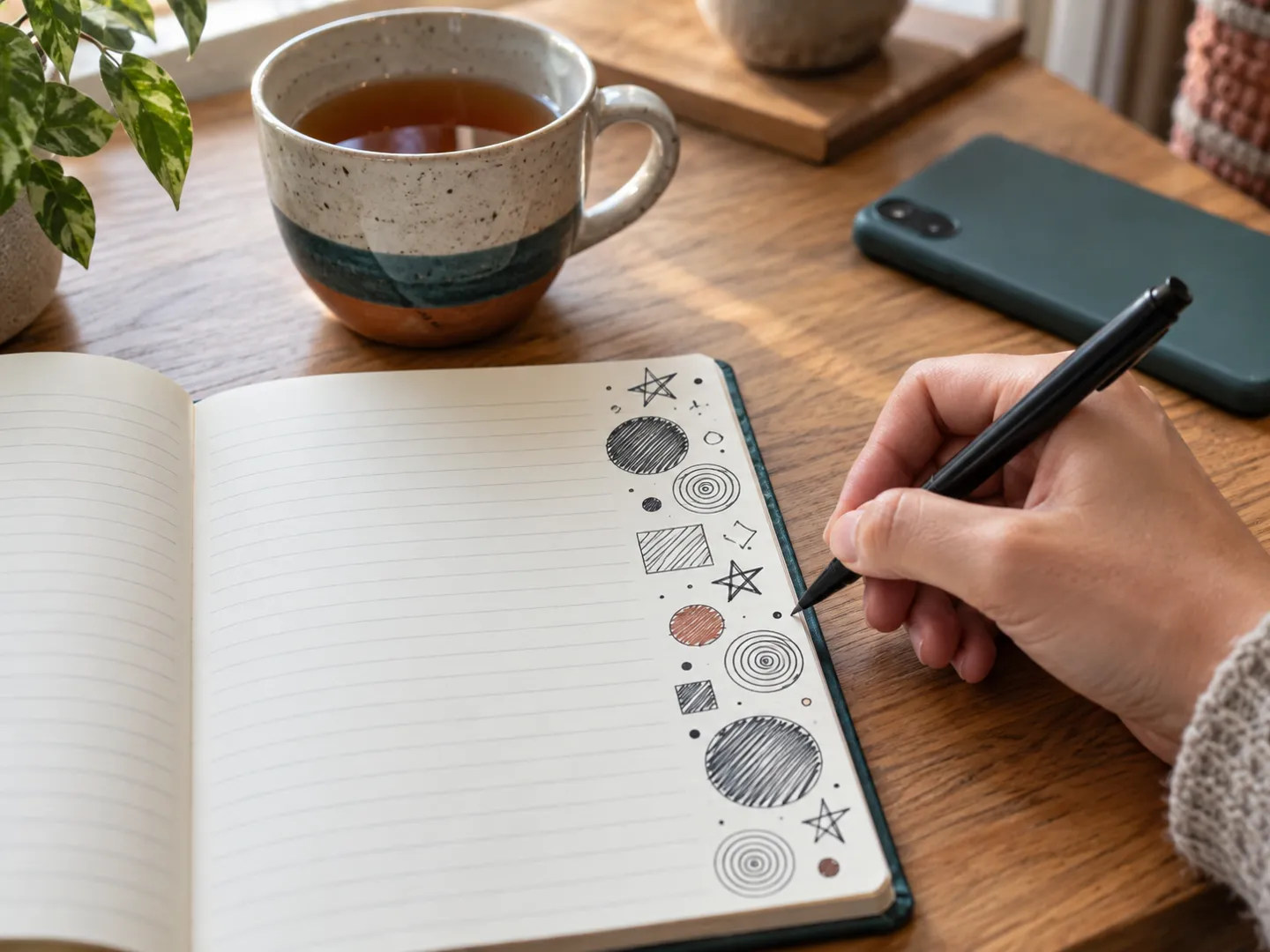
Doodle while you listen
Simple doodles during a dull message helped people recall more of it, not less.
See the experiment doodleartist™
00WHAT THE RESEARCH SAYS
You do not need talent. You need a pencil and a few minutes.
Psychologists have tested what happens when ordinary people doodle, sketch and make art. The results point to better memory, lower stress hormones and sharper eyes, whether the drawings are good or not. Here is the evidence, in plain English.
Plain English, with the sources linked.
Find your reason to draw01Principles
02THE SHORT ANSWER
In the studies below, the benefits came
from doing it, not from being good at it.
ATTENTION
Simple doodles during a dull message helped people recall more of it, not less.
See the experimentMEMORY
A quick sketch of a word or idea is remembered far better than writing it out again.
How much better?CALM
Three quarters of adults had lower stress hormone levels after 45 minutes of free art-making.
Read the facts03WHY DRAW?
Choose what you would like drawing to do for you. Each answer comes from a published study linked at the bottom of the page.
These are averages from small studies of particular groups. They show what is possible, not a promise for every person.
04TWO EXPERIMENTS WORTH KNOWING
Drawing is often treated as a distraction.
These results suggest the opposite.
29% more
Details recalled in a surprise test
Forty people heard a dull 2.5-minute phone message about who was coming to a party. Half were asked to shade shapes as they listened. In a memory test they had not been warned about, the doodlers recalled 29% more details.
DOODLE WHILE LISTENING · 2009
Often 2x+
Drawn words versus written words
Students had 40 seconds to either draw a word or write it out repeatedly. Later, they often recalled more than twice as many of the drawn words. The benefit held even when they had only 4 seconds to draw.
DRAW TO REMEMBER · 2016
One explanation the Waterloo researchers give: drawing makes you think about what a thing looks like, how it is shaped and what it means, and move your hand to show it, all at once.
05START TODAY
A small notebook and a pencil by the phone, in a bag or on the desk makes a doodle a ten-second decision.
The doodlers in the 2009 study shaded shapes. Keep it loose and repetitive so your attention stays on what is being said.
A shopping item, a new word, a plan: a rough picture of it can stick better than writing it down again.
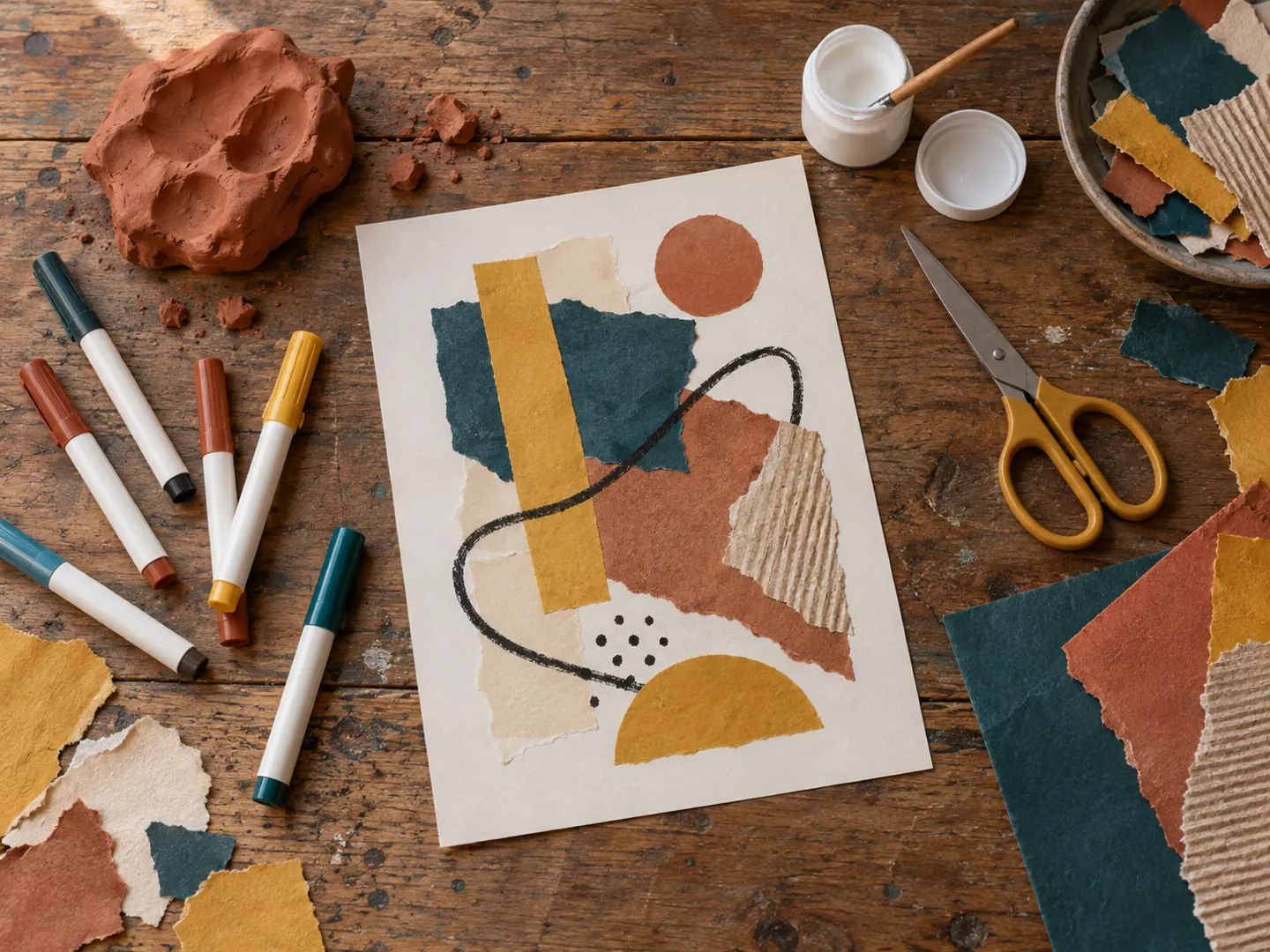
Set aside a free half hour or more with whatever materials you have. No instructions, no aim, no judging the result.
06DRAWING FACTS
The walls of the Chauvet cave in southern France were decorated with hundreds of animals around 36,000 years ago. It became a UNESCO World Heritage site in June 2014.
In the 2016 Drexel study, just under half the adults had limited art experience. The researchers found no link between past experience and lower cortisol.
A 2018 Waterloo study found drawing beat writing for memory in students and older adults, with an especially large benefit for the older group.
In the 2016 Waterloo experiments, drawing still improved recall when people had only 4 seconds to sketch each word.
Harvard medical students who took eight weekly sessions of art observation, each two and a half hours long, made 38% more accurate visual observations afterwards.
07QUICK QUESTIONS
Short answers to the questions people ask most.
No. In a 2016 Drexel University study, just under half of the 39 adults had limited art experience, and the researchers found no link between past experience and lower cortisol. The Waterloo memory studies also found drawing helped people who were not good at it.
Not necessarily. In a 2009 study by Jackie Andrade, 40 people heard a dull 2.5-minute phone message. Those asked to doodle while listening recalled 29% more details in a surprise memory test than those who did not.
In experiments at the University of Waterloo, people remembered words they had drawn much better than words they had written out, often more than twice as many. A later study found the benefit was especially large in older adults.
The Drexel study used 45 minutes of free art-making with markers, clay or collage. Afterwards, 75% of participants had lower cortisol. About a quarter had higher levels, which the researchers said is not necessarily bad.
Much older than writing. The walls of the Chauvet cave in southern France were decorated with hundreds of animals around 36,000 years ago. The cave was found in December 1994 and became a UNESCO World Heritage site in June 2014.
08Sources
A NAME WITH CHARACTER
doodleartist.com is part of the DoodleSale portfolio. It isn't in an auction right now, but you can ask about leasing it.